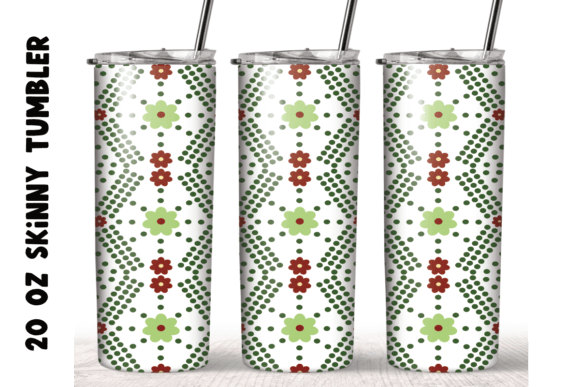
Christmas Flowers Dot Green Tumbler Wrap
A Designer’s First Glance: Cheerful, Clean, and Curiously Versatile
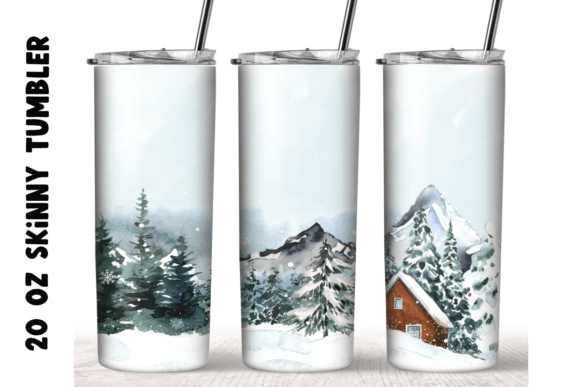
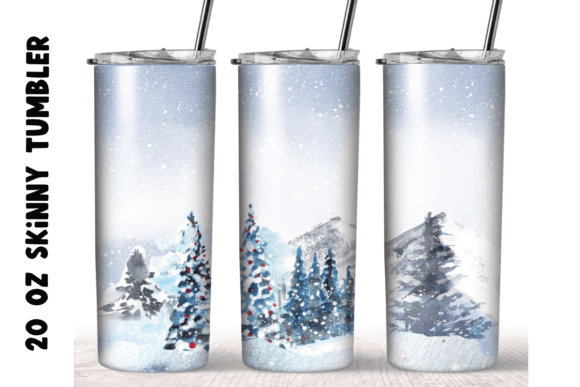
When I opened the Christmas Flowers Dot Green Tumbler Wrap, my first thought wasn’t “Oh, another holiday graphic.” It was, “This could actually work on a linen tea towel — or a baby onesie — if handled right.” The composition balances festive energy with quiet sophistication: clusters of stylized holly, eucalyptus, and soft green dots arranged in a rhythmic, wrap-friendly flow. There’s no heavy script, no glittery overload — just confident negative space, consistent line weight, and a color palette that reads clearly even in grayscale. That’s rare in seasonal designs meant for sublimation, but it’s exactly why this one caught my eye for embroidery adaptation.
From Tumbler Wrap to Embroidery Asset: What Translates Well
I tested the Christmas Flowers Dot Green Tumbler Wrap as a foundation for several real projects — not just tumblers. A custom embroidered apron for a local bakery? Yes. A set of nursery pillow covers for a boutique client? Absolutely. Even a small-batch run of embroidered patches for a craft fair stall. Its 9.3 x 8.2 inch template size gives generous breathing room, making it easy to crop or reposition for standard hoop sizes (5x7”, 6x10”) without losing visual integrity.
- Custom apparel: Works beautifully on sweatshirt cuffs, tote bag corners, and the back yoke of lightweight crewnecks — especially when simplified into a focal motif rather than stretched full-wrap.
- Baby embroidery: The rounded shapes and absence of fine linework mean it stitches cleanly on interlock cotton and brushed poly — no skipped stitches or thread breaks on delicate fabrics.
- Holiday gifts & boutique products: Customers respond well to its understated elegance. One Etsy seller told me her buyers specifically mentioned “not too kitschy” — a direct win for this design’s tone.
- Digital embroidery file prep: Since it arrives as high-res PNGs (straight and tapered), it converts cleanly to vector or stitch-ready formats using modern digitizing software — no jagged edges or pixelation in critical curves.
Where to Proceed With Intention — Not Assumption
This isn’t a “drop-in-and-stitch” machine embroidery design out of the box. It’s a graphics asset — a starting point, not a finished embroidery file. That distinction matters. Before committing to production, consider these practical boundaries:
- Small hoop sizes: Don’t force the full wrap into a 4x4 hoop. Instead, isolate one floral cluster or dot grouping — it holds up remarkably well as a standalone embroidered patch or tote bag accent.
- Textured or stretchy fabric: On terry cloth towels or ribbed knit caps, dense fill areas may pucker. Use cutaway stabilizer + reduced stitch density in those zones — or opt for satin stitch outlines only.
- Dark fabric backgrounds: The green-on-green dot pattern loses contrast on charcoal or forest green textiles. Swap dots for cream or pale gold thread, or add a subtle white underlay for lift.
- Frequent-wash items: For kitchen towels or baby bibs, avoid overly dense satin stitch sections where thread might fray over time. Prioritize running stitch outlines and open fill patterns in high-abrasion zones.
Why This Design Builds Trust — Not Just Decoration
In my decade of reviewing embroidery assets for craft businesses, I’ve learned customers don’t buy “designs.” They buy confidence — in quality, clarity, and care. The Christmas Flowers Dot Green Tumbler Wrap delivers that quietly. Its balanced spacing means stitching stays legible at multiple scales. Its cohesive green palette reads as intentional, not accidental — reinforcing brand consistency for small shop owners and Etsy sellers who curate seasonal collections. When stitched onto a handmade ceramic mug sleeve or a linen holiday card holder, it feels like part of a thoughtful system — not an afterthought graphic slapped on.
That perception lifts perceived value. A customer paying $48 for an embroidered tea towel doesn’t just see thread and fabric — they see curation, seasonality, and craftsmanship. This design supports that narrative without shouting.
Practical Notes Every Embroidery Designer Should Run Through
- Test on scrap fabric first — especially if adapting for textured surfaces like canvas or fleece.
- Check thread color contrast against your base fabric using both natural and artificial light.
- Review stitch density manually if converting from PNG — avoid overloading small floral elements.
- Confirm hoop size compatibility before digitizing; the tapered version helps with curved surfaces like mugs or hats, but still requires manual adjustment for embroidery machines.
- Inspect small details (like dot separation and petal edges) at 200% zoom — what looks clean on screen may need cleanup for smooth stitching.
- Test black-and-white mockups to verify readability on dark or busy backgrounds.
- Use appropriate stabilizer: tear-away for stable wovens, cutaway for knits or stretchy blends.
- Verify licensing terms before selling finished items — while this is a Crafts-category graphic, commercial use rights aren’t implied unless explicitly stated by the creator.
Final Thought: A Quietly Confident Holiday Staple
The Christmas Flowers Dot Green Tumbler Wrap won’t dominate your holiday collection — and that’s its strength. It fits seamlessly into a cohesive lineup of handmade products: as a subtle cuff detail on a wool-blend sweater, a refined border on a holiday market banner, or the centerpiece of a minimalist embroidered ornament kit. It’s not flashy. It’s functional, flexible, and quietly festive — exactly what experienced designers and small business owners reach for when authenticity matters more than volume. If you’re building a holiday line that feels handmade, intentional, and ready for real-world wear — this is one Graphics asset worth keeping close.